Sunday, June 16, 2019

Human Body Organ System ANSWERS


Class, here are the main organs and functions for every organ system you studied in class. Review them for your test:


The skin, digestive, respiratory, and urinary systems make up the Excretory system:


Here's a link to Summary Notes on Organ Systems and their functions--> SUMMARY NOTES- Organ Systems and Functions


**To practice for the Test, there are a bunch of Activities to do on the following website, such as Quizzes, Matching Activities, and Fill-ins:

H.W.- Play the following games, and tell me what you think of them:


Virtual Frog Dissection

Sunday, June 9, 2019

Human Body Organ Systems WEBQUEST

Class, use these websites to help you fill out your Webquest packet on the Organ Systems and their functions. You will be tested on all the information you gather, so pay close attention and study your packet once you are done. Your Textbooks can be used as well, starting on page 384.

The Science Spot's Kid Zone- Health & Human Body (InnerBody)

Biology4Kids (Good for organ systems working together!; look on the right side)

KidsHealth (how the Body works) and KidsHealth- Different Organ Systems

Quest Garden (use this site to check out the videos)

All the Organ Systems' Functions

Ducksters (look at the section titled "The Human Body" and look up Organs)

British Broadcasting Company (click on the specific organ systems)

BrainPop (search each specific organ system)

Neok12 (look up specific organ systems under Human Body)

StudyJams Videos (look under the Human Body topic)

SoftSchools- Human Body Facts

ScienceKids (Human Body Facts)

*In addition, you have to research the functions of all the organs/parts of your organ system and explain how this system works together with 1 or 2 other organ systems.

-------------------------------------------------------------------------------------------------------------

H.W.
Complete the following Online QUIZ. Write out the Questions and Answers:
KidsHealth- the Brain & Nervous System

**On other days, do the following Quizzes:

Science Quiz Net (choices of Quizzes)

KidsHealth- Heart & Circulatory System

KidsHealth- Lungs & Respiratory System

KidsHealth- Digestive System

OR choose a QUIZ from here --> KidsHealth- QUIZZES


**Here are some Quizlets to practice doing:

Quizlet 1
Quizlet 2
Quizlet 3

-------------------------------------------------------------------------------------------------------------

Human Body Interactive Games:


Wednesday, May 29, 2019

Study Guide for Cells and Cell Organelles

Use the following websites to help you study for the Test on Cells and functions of Organelles (in a Animal and Plant Cell):

Cell Organelles & Functions 1 (*This is from the Powerpoint Lesson I showed in class)

Is it a Plant or Animal? (UEN)

CELLS alive! Website (animated version of an Animal or Plant Cell)

These videos are good ones that discuss all the parts of a cell:


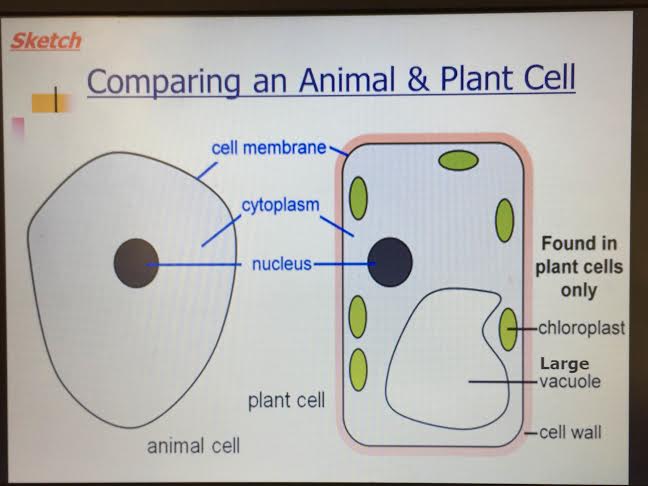
Here are some pictures to help you understand more about Animal and Plant cells. *Click on them to see them bigger:


*For the test, you will also need to know about:        
- Cell Organization (cells --> tissues --> organs --> organ systems) 
- The Cell Theory
- Photosynthesis

Here's a practice QUIZ to study from. It's a little more advanced, but check it out- SoftSchools QUIZ- The Cell and Cell Structure

In addition, do the following Quizlets in order to prepare for the Exam on Cells and Cell Organelles:

QUIZLET- Cells1

QUIZLET- Cells2

QUIZLET- Cell Organization1

QUIZLET- Cell Organization2

Saturday, May 18, 2019

Cell Organelle Research Worksheet (WEBQUEST)

Class, this post is for your Webquest assignment on Cell organelles, now that you've learned about the basic cell. This will be done over 2 days (you can use headphones).
Your task is to research different cell organelles and describe the function and structure of each one, draw pictures of the organelles (with labels), and identify if they belong in animal cells, plant cells, or both. Also, write an analogy/metaphor for each organelle. Focus more of the FUNCTION of the cell organelles. 

Use the following websites to help you fill in all pages of the packet. Your Textbook is also available to use, on pages 364-367. Remember, ONLY use the following websites!:

Biology 4 Kids (look for Cell Organelles on right side)

Cell Organelles & Functions 2 (Use this PPT to help you understand the structures of cell organelles and their functions)

Kidtopia (Google for kids)

BBC (British Broadcasting Corporation)

Cell Organelle Table

BrainPop Video- Cell Structures

Flocabulary Video- Cells

Parts of the Cell (Ducksters)

Bacteria (Ducksters)

Cells Alive! (click on Interactive Cell Models-- Animal, Plant, or Bacteria cell)

Cell Videos (neoK12)
_____________________________________________________________________

The Cell Theory:
n1) All living things are made of one or more cells.
n2) The cell is the basic unit of life in which the activities of an organism occur.

n3) All cells come from cells that already exist.


------------------------------------------------------------------------------------------------------------------

***If you have free time when you're done, take this Online Quiz on Cells:

Plant vs Animal Cell QUIZ

Also, if you finish early, go back to Cells Alive and play the puzzles and games here!
Cells Alive!- Memory Game

---------------------------------------------------------------------------------------------------------------

Here is an interactive learning app that helps you identify the parts of an animal cell and read about the function of its organelles:

A Typical Animal Cell (Wisc-Online; advanced site)

--------------------------------------------------------------------------

For homework, play all 3 games on the following website and take the Animal Quiz too- Cell Games- Animal, Plant, and Bacterial Cell.

H.W.Then take the following QUIZ and write the 10 Questions and Answers in your notebooks. Press the START button on the bottom of this link or scroll down and you'll see all 10 Questions. Here is the link-> ProProfs Animal and Plant Cell QUIZ

Tuesday, May 14, 2019

Understanding the difference between Physical and Chemical changes

Class, here are more notes to help you understand the difference

between Physical and Chemical changes. 

Physical changes:
1)Appearance can change, but substance keeps the same identity.
2)You can always go back to the original substance.

Chemical changes:
1)Substance formed is new. New molecular arrangement.
2)You can not go back to the original substance (not reversible). 


This This is another way of thinking about the differences:
During a chemical change, there is a change in the chemical composition of the original molecules. New elements or compounds form at the end, with a different arrangement of atoms. Bonds break and reform! But in a physical change the molecules stay the same, they just move farther apart or closer. Look at the picture below to see the differences: 


(notice how the arrangement of atoms changed when water became hydrogen peroxide)


Here are videos to help you understand the differences
too. Click on here- 
BrainPop- Property Changes


Also, click on here to watch several videos- 
Physical and Chemical changes


Remember these 2 important concepts:

The Law of Conservation of Mass:

During a chemical reaction, the mass of what you end with is
always the same as the mass of what you start with.


 Chemical reaction:

occurs when you start with one molecule and turn 

it into a new one. Chemical bonds are made or 

broken in order to create this new molecule. 


Finally, here is a great article that details the difference between both types of changes- The Ice-Cube Tray and the Frying Pan

Sunday, April 28, 2019

Solutions and Solubility

Class, here are some pictures and videos on Solutions and Solubility. Watch them and compare with your class notes. Hope it helps. 


A hot solvent can usually hold more solute than a cool solvent can (temperature increase).
But if a hot saturated solution is cooled slowly, sometimes the excess solute remains dissolved for a period of time (it doesn't settle yet).
Such a solution is said to be supersaturated, because it contains more than the normal amount of solute that can be dissolved at a lower temperature (it went over its limit).


The following are Summary Notes for this topic. Feel free to look at it and print it if you want:


Friday, April 12, 2019

Topics on Matter Test, Videos, Periodic Table Game

Here are the topics on next week's Test. You can click on the picture to see it bigger.


Here are some pictures from my slides that will help you too. Again, click on them to see it bigger:


------------------------------------------------------------------------------------------------------------------

This is an excellent Review Video on Matter and its Properties:

-----------------------------------------------------------------------------------------------------------------


Here is another Video on Elements, Compounds, and Mixtures:

------------------------------------------------------------------------------------------------------------

Periodic Table game-- Sort these Elements into metals, metalloids, and nonmetals. It's a fun game!:
BrainPop Game- Sortify Elements


This is a BrainPop video on the Periodic Table:
BrainPop- Periodic Table of Elements


-----------------------------------------------------------------------------------------------------------------

This is an online version of the Periodic Table:
Ptable